Back when I was away in college and post-grad studies, which meant being miles away from home, I had to make do with fuss-free, ideally no-cook breakfast like cereal, bread and spread, AND salted eggs. Especially salted eggs. I could eat salted eggs for like three times a week. Even up to this day, I still like salted eggs. I know some have been put off by salted eggs that have gone bad (and I too have my share of such unfortunate buys), yet I still remain loyal to good-quality salted eggs. Tip: Find salted egg vendors who have high rates of turn-over, or those whose salted eggs get sold way before they go bad.
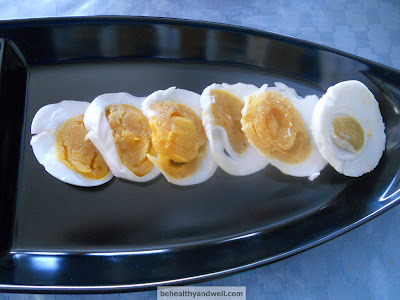
There’s something about the creamy and rich saltiness of the yolk which charms me. For lack of a better word, I say it is umami-rich—flavorful, meaty, indulgent. The texture and consistency is a bit like boiled eggs, except that the yolk oozes with flavorful oils which impart a more rounded mouth-feel. I like to eat it as is, though the usual way of eating it is to chop it in wedges and toss it with a little vinegar, tomatoes and onions.
Here are some frequently asked questions about salted eggs:
What is the history behind salted eggs?
The making of salted eggs originates in China, so says Wikipedia, but salted eggs are now being eaten in most Asian countries. It is essentially a way of preserving the eggs to make them last longer in yonder days when refrigerators were unheard of.
How are salted eggs made?
Salted eggs are really duck eggs, hence the bigger size. In China, salted eggs are usually made by soaking duck eggs in brine or– believe it or not– salt-charcoal mixture. On second thought, I approve of charcoal as it is an antiseptic. This may well explain why salted eggs made this way last for years. In the Philippines, the process is a bit quirky. The best-tasting salted eggs are done by soaking duck eggs in either salt and clay mixture or—believe it or not again—salt and termite soil mixture. Yes, you heard, er, read me right—soil or clay from termite houses! Some have used anthills as well. The soaking is done for 2 weeks, after which salted eggs would remain good for up to a month, or longer if the termite soil is sterilized prior to the curing.
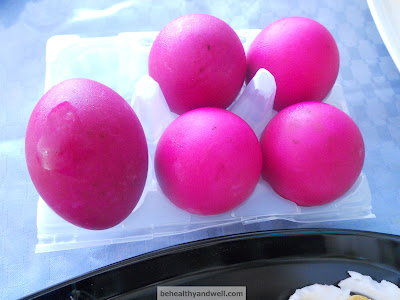
Why are salted eggs in the Philippines colored pink?
As soon as brining of eggs is done, the eggs are stained with pink food color. I’ve heard that this practice is not healthy as the food coloring used, Sudan Red dye, is a suspected carcinogen. There’s a Filipino social entrepreneur, though, who stains his salted eggs with turmeric juice, making the eggs golden yellow in color. He aptly called it golden eggs. I would love this, as turmeric is natural and healthy, but unfortunately, all we have in my city are the pink ones.
I guess from now on I’m gonna go easy on the pink salted eggs. I can’t promise not to buy them, the synthetic dye notwithstanding. I have no other choice, except abstinence (which is not an option for me when it comes to salted eggs). I hope salted egg vendors start using turmeric color instead. –behealthyandwell.com