Eggplant or Brinjal, is a very low calorie vegetable and has healthy nutrition profile; good news for weight watchers! The veggie is popularly known as aubergine in the western world.
Botanically, aubergine belongs to Solanaceae family and named as Solanum melongena. This perennial plant is native to Indian subcontinent and now grown in many tropical and semitropical regions.
 |
 |
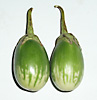 |
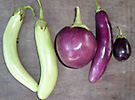
| Eggplant (Brinjal)- deep blue variety. | Aubergine-different varieties. | Green variety. |
Several varieties of aubergines are grown all around the world. Depending on the cultivar type, they vary greatly in size, shape, and color. Generally, aubergines fall into two broad categories, either oval shaped, or thin and elongated.
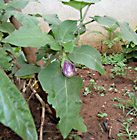
The plant reaches about 3-4 feet tall in quick time and bears many bright fruits. Each fruit has smooth, glossy skin. Internally, it features off-white color pulp with numerous centrally arranged small, soft seeds. Fruits are generally harvested when they reach maturity but just short of full stage ripeness.
Health benefits of Eggplant (aubergine)
- Eggplant is very low in calories and fats but rich in soluble fiber content. 100 g provides just 24 calories but contributes about 9% of RDA (recommended daily allowance) of fiber.
- Research studies conducted at the Institute of Biology of São Paulo State University; Brazil suggested that eggplant is effective to control high blood cholesterol.
- The peel or skin (deep blue/purple varieties) of aubergine has significant amounts of phenolic flavonoid phyto-chemicals called anthocyanins. Scientific studies have shown that these anti-oxidants have potential health effects against cancer, aging, inflammation, and neurological diseases.
- Total antioxidant strength measured in terms of oxygen radical absorbance capacity (ORAC) of aubergines is 993 µmol TE/100 g. At value 15; they are one of the low glycemic index (GI) vegetables.
- It contains good amounts of many essential B-complex groups of vitamins such as pantothenic acid (vitamin B5), pyridoxine (vitamin B6) and thiamin (vitamin B1), niacin (B3). These vitamins are essential in the sense that body requires them from external sources to replenish and required for fat, protein and carbohydrate metabolism.
- Further, this vegetable is an also good source of minerals like manganese, copper, iron and potassium. Manganese is used as a co-factor for the antioxidant enzyme, superoxide dismutase. Potassium is an important intracellular electrolyte that helps counter pressing (hypertension) effects of sodium.
| Principle | Nutrient Value | Percentage of RDA |
|---|---|---|
| Energy | 24 Kcal | 1% |
| Carbohydrates | 5.7 g | 4% |
| Protein | 1 g | 2% |
| Total Fat | 0.19 g | 1% |
| Cholesterol | 0 mg | 0% |
| Dietary Fiber | 3.40 g | 9% |
| Vitamins | ||
| Folates | 22 µg | 5.5% |
| Niacin | 0.649 mg | 4% |
| Pantothenic acid | 0.281 mg | 6% |
| Pyridoxine | 0.084 mg | 6.5% |
| Riboflavin | 0.037 mg | 3% |
| Thiamin | 0.039 mg | 3% |
| Vitamin A | 27 IU | 1% |
| Vitamin C | 2.2 mg | 3.5% |
| Vitamin E | 0.30 mg | 2% |
| Vitamin K | 3.5 µg | 3% |
| Electrolytes | ||
| Sodium | 2 mg | 0% |
| Potassium | 230 mg | 5% |
| Minerals | ||
| Calcium | 9 mg | 1% |
| Copper | 0.082 mg | 9% |
| Iron | 0.24 mg | 3% |
| Magnesium | 14 mg | 3.5% |
| Manganese | 0.250 mg | 11% |
| Zinc | 0.16 mg | 1% |
Aubergine (Brinjal), (Solanum melongena), raw, Nutritive value per 100 g (Source: USDA National Nutrient data base)PrincipleNutrient ValuePercentage of RDAEnergy24 Kcal1%Carbohydrates5.7 g4%Protein1 g2%Total Fat0.19 g1%Cholesterol0 mg0%Dietary Fiber3.40 g9%Vitamins Folates22 µg5.5%Niacin0.649 mg4%Pantothenic acid0.281 mg6%Pyridoxine0.084 mg6.5%Riboflavin0.037 mg3%Thiamin0.039 mg3%Vitamin A27 IU1%Vitamin C2.2 mg3.5%Vitamin E0.30 mg2%Vitamin K3.5 µg3%Electrolytes Sodium2 mg0%Potassium230 mg5%Minerals Calcium9 mg1%Copper0.082 mg9%Iron0.24 mg3%Magnesium14 mg3.5%Manganese0.250 mg11%Zinc0.16 mg1%
Selection and storage
 |
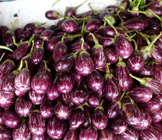 |
| Solanum melongena plant. | Fresh aubergines in a farmers market. |
Eggplants are available afresh all around the season. In the markets, varieties of eggplants varying in size, shape, and color are put for sale.
Buy healthy looking, firm, shiny, bright-colored fruits that feel heavy and solid. Take a close look at the stalk; if it is stout, firm, and green; that means the fruit is fresh.
Avoid those shriveled, soft in hand and with wrinkles, surface cuts or bruise. Always avoid over-mature, old-stock, and sunken eggplants as they taste bitter and, therefore, unappetizing.
At home, they can be kept in cool place for use in a day or two but ideally should be stored inside the refrigerator set at high relative humidity, where they keep fresh for few days.
Preparation and serving methods
 |
| Eggplant-asparagus sandwich. Photo courtesy from: The essential vegetarian cookbook |
Wash eggplant thoroughly in cold water before use. Trim the stalk end using a sharp knife. Sprinkle a pinch of cooking salt or soak pieces in salt water to remove the bitter compounds. Whole fruit, including its skin and fine, tiny seeds are edible.
Whole, cubed, or sliced; aubergine can be used in variety of recipes.
Here are some serving tips:
- Spicy fried aubergine slices in general used as a favorite side dish in salads and appetizers.
- Brinjals, as they have popularly known in South-Asian region, feature mainly in many kinds of Indian cuisines. It can be stew fried, roasted, baked or ground (baingan bartha, baingan chutney) in the preparation of variety of recipes.
- In Southern India, it is chopped into cubes and used in curry, chutney, and with rice (brinjal pulao).
- In Southern Europe, Turkey, and Middle-East where aubergines are one of the common ingredients used in variety of delicious recipes like mousaka (eggplant casserole), baba ghanoush (mashed eggplant preparation similar to South Asian baingan ki bartha), breadcrumbs, imam bayildi (stuffed-aubergine), etc.
- Stewed Asparagus spears sandwiched with an aubergine slice is a popular recipe in Mediterranean region.
- It is also widely used in pickling.
Safety profile
Eggplant (aubergine) contains a very small amount of nicotine than any other edible plant with a concentration of 0.01mg/100g. However, the amount of nicotine from eggplant or any other food is negligible and therefore, shall not warrant against its usage. So, enjoy!
-nutrition-and-you.com